Erisioni Show Program
Where music, performance, and culture come alive!
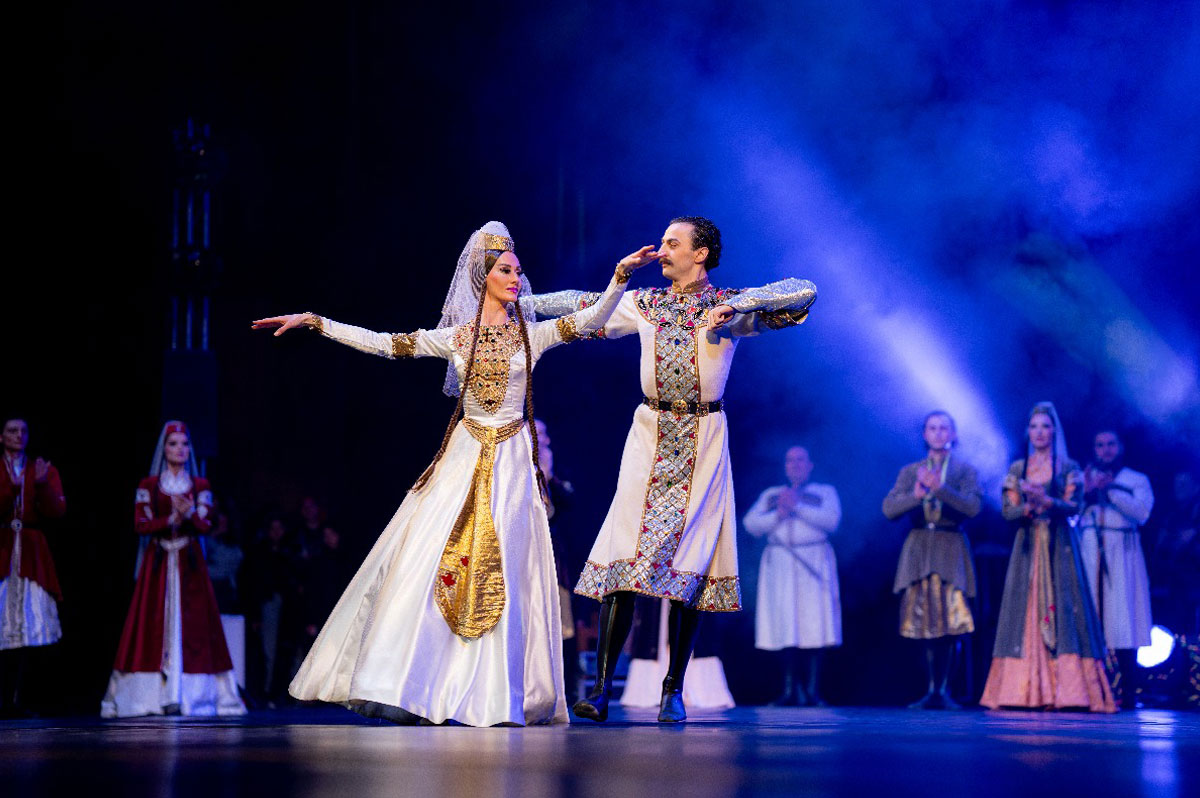
DAVLURI-KARTULI
It is a dance of entrance, amorous, romantic content that has survived to our time, and was performed at the royal court. The dance can be considered the pinnacle of Georgian folk choreography.
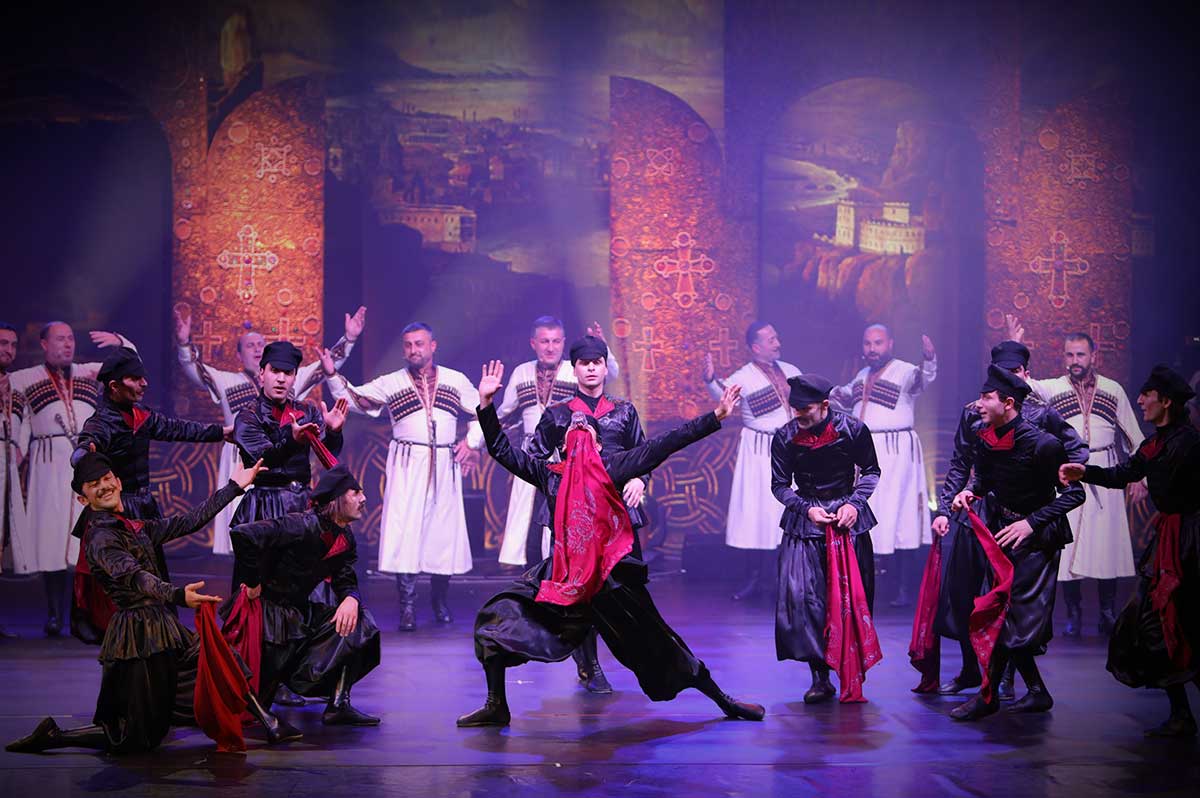
KINTOURI
The dance belongs to the urban type of dances and, in its essence, reflects the life of the old city. The name of the dance itself, the color of old Tbilisi, is associated with the name of the small merchants, the kintos.

Imeruli Kanuri
Imeretian Labor Song.

Guruli Perkhuli
An old ceremonial folk dance, a three-tiered perkhuli, which is performed in Guria to the accompaniment of a two-person three-part song.
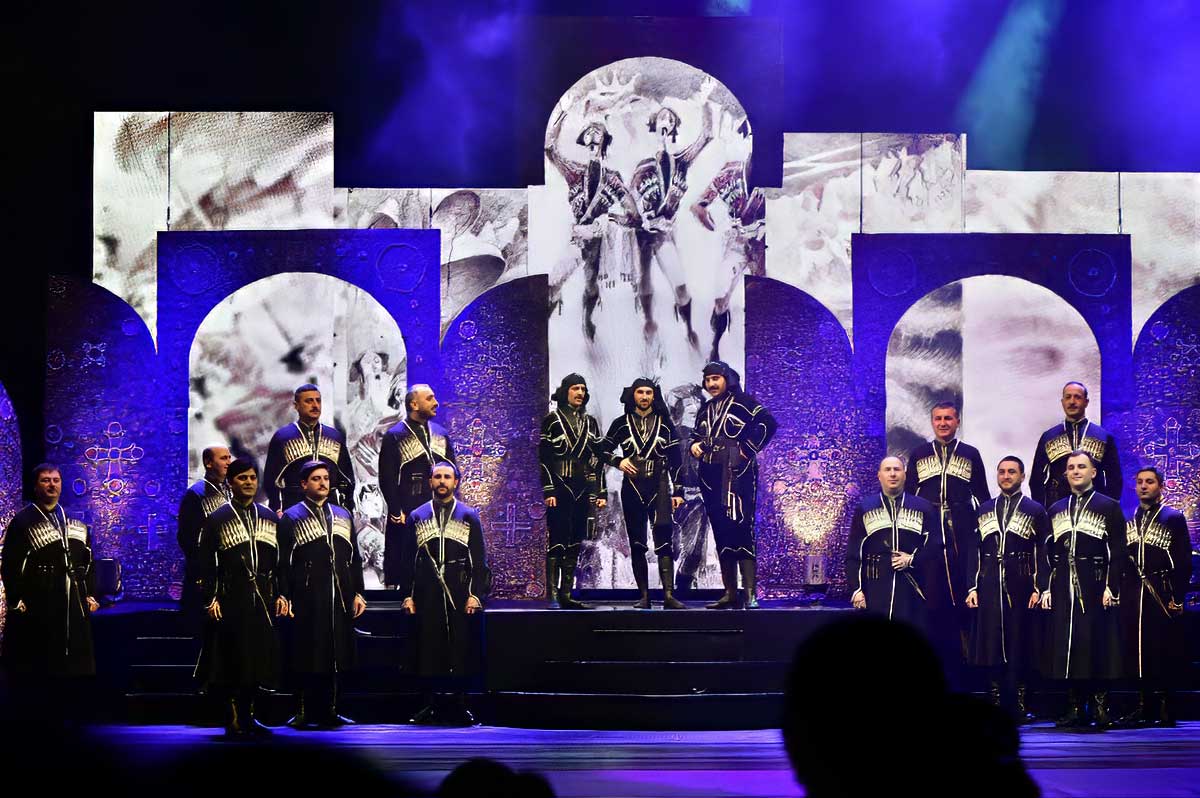
Khasanbegura
Georgian folk song, of a historical-sagrim nature, is widespread in Guria and Adjara.

Khorumi
The Khorumi dance is a dance of martial arts, and the Khorumi dance embodies the valor and grandeur of Georgian warriors.

Nana
It is a dance depicting the beauty of Georgian women, which shows us the emotions and feelings of Georgian women.

Kazbeguri
This dance, born in the mountains of Georgia, is distinguished by its characteristic strict dance movements. A dance that was only performed by boys in the mountains.

Kalai
Erisioni's dance "Kalai", which is based on the love story of a dancing couple.
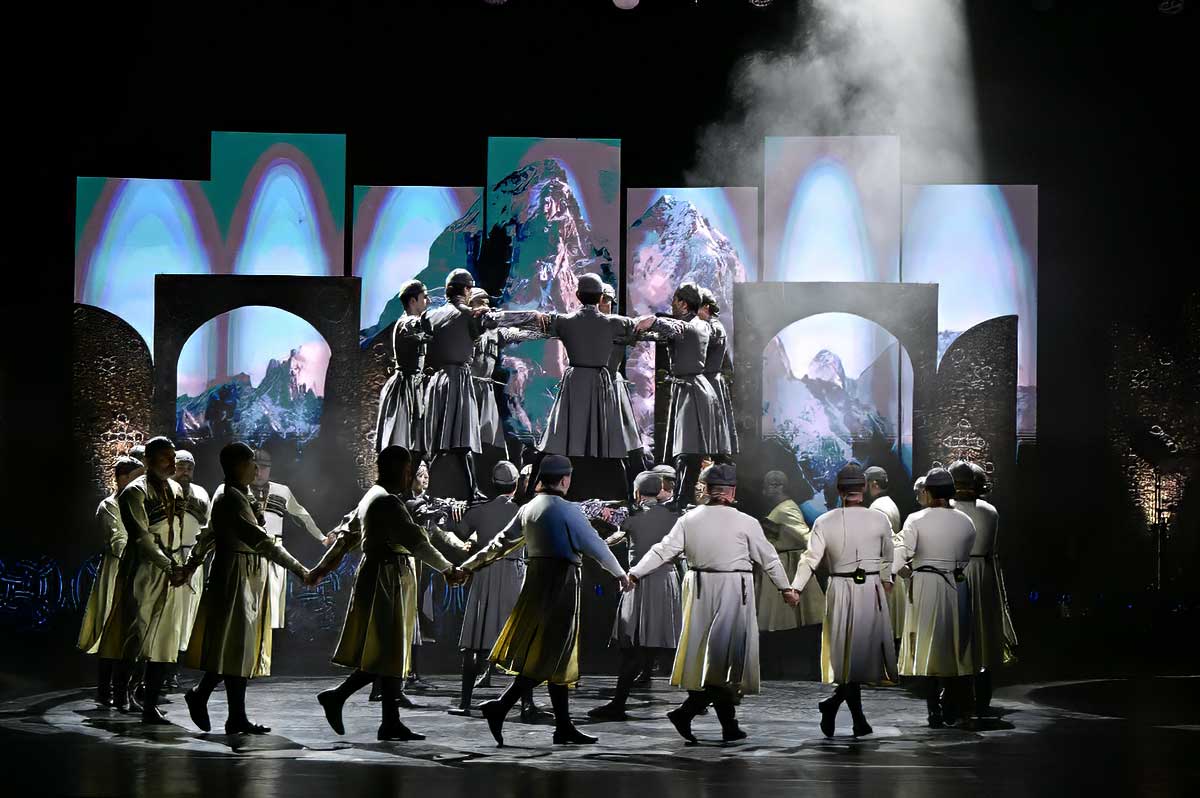
Svanuri Perkhuli
This is a ceremonial, ritualistic dance performed to the accompaniment of song and demonstrating the strong character of the people living in the Svaneti region.

VOISA KHARIRA
A Mingrelian saperkhulo, a romantic, ceremonial song, which is performed to the accompaniment of dance.

Kartl-Kakhuri
It is a ceremonial dance accompanied by singing, which ended in Kartli and Kakheti
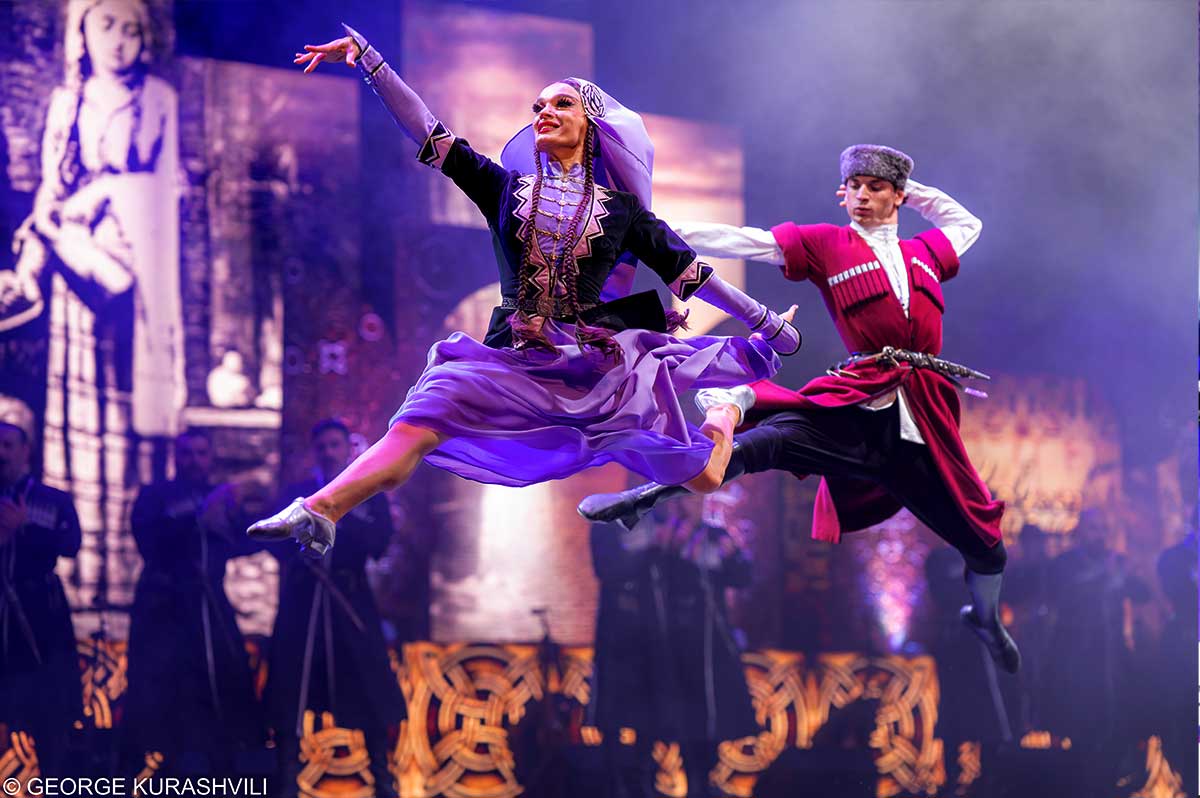
Abkhazuri
A humorous song accompanied by dancers, reflecting the festive mood and public holiday

Tesh Ihbali
A romantic Mingrelian love song.

Acharuli
This is a romantic dance of the people living along the Black Sea coast, in which the love between a man and a woman is expressed through lyrical song and dance.

ODOIYA
It is a polyphonic, labor song from Megrelia. It was performed during the plowing and threshing of the grain.

MTIEBI
"Mountains" depicts a celebration in the mountains. Young boys compete with each other in dizzying fiery tricks and girls in dazzling dances. A choir of singers is involved in the competition, creating an unforgettable spectacle in unity

KUMURIS NADURI
It is an Imeretian polyphonic, labor song. It was performed during the plowing and threshing of grain.

SIMDI
This dance originates from the Ossetian region and is based on slow and precise movements of couples. The main beauty of this dance is based on the rhythmic, unified rotation of the rows of dancers and the contrast of their black and white costumes. The soloist male part is particularly difficult to perform and at the same time spectacularly beautiful.
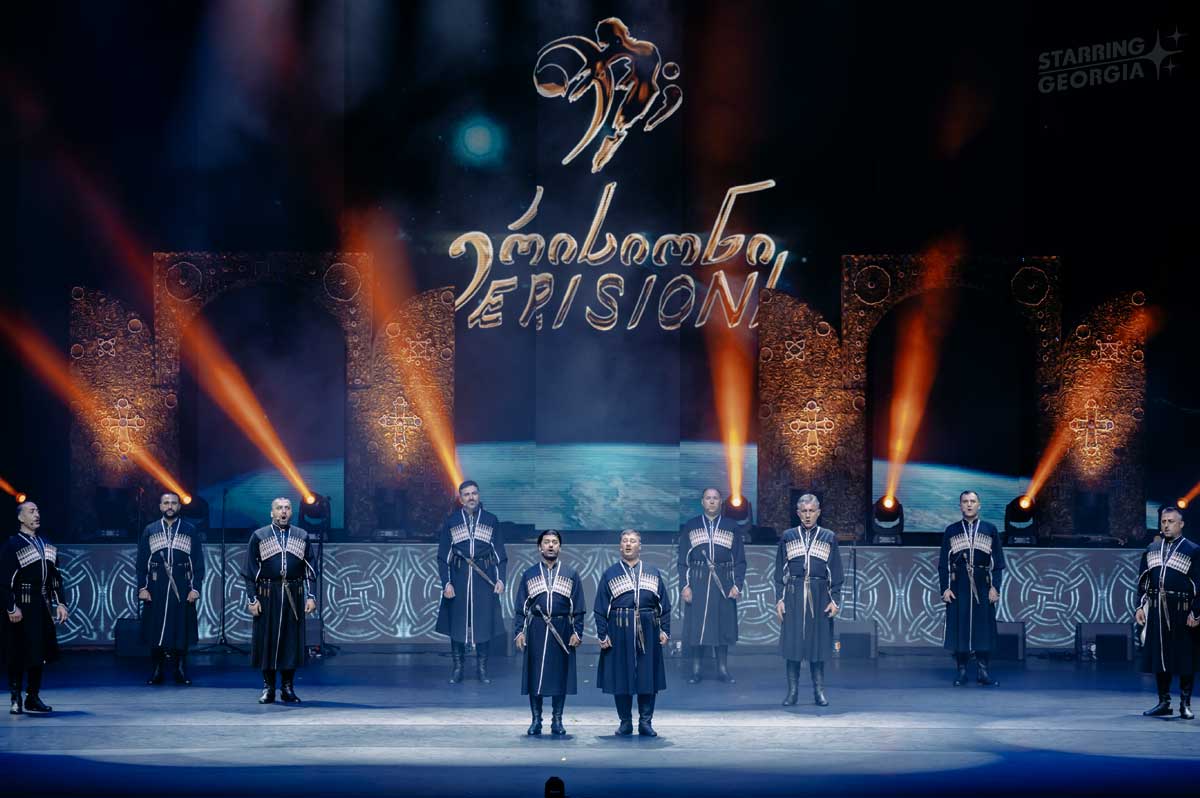
CHAKRULO
Kartli-Kakhetian classical, choral, polyphonic, heroic table song.
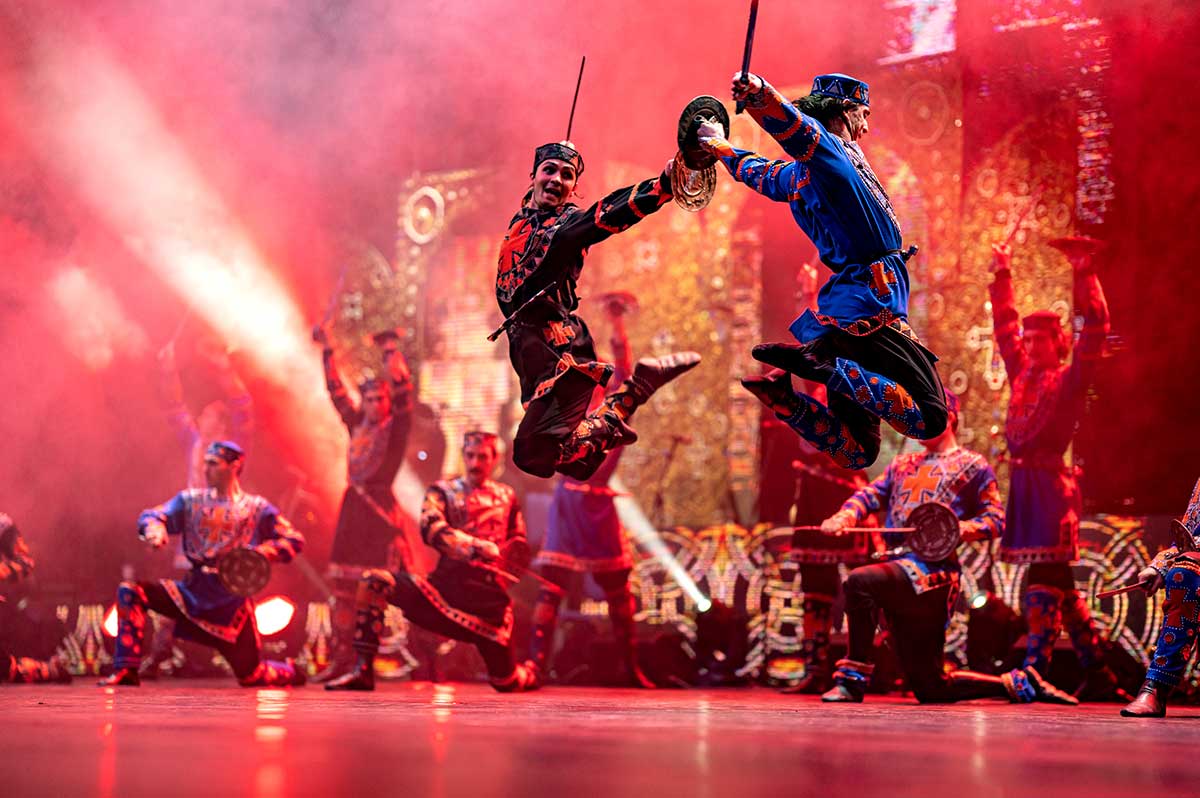
KHEVSURIAN FARIKAOBA
Two men compete for the love of a beautiful woman. Their rivalry with their friends turns into a sword fight, which takes on the character of war. The fight can only be stopped by a woman's headscarf, emphasizing respect for a woman's headscarf and, in general, respect for women.

FINAL
The finale features short excerpts from all the numbers in the concert program.
